

The CA Quarterly Review (Winter 2025)
NEWS & INFORMATION QUARTERLY FOR OWNERS & AGENTS OF THE PERFORMANCE BASED CONTRACT ADMINistrator FOR OHIO & WASHINGTON DC
- Hello Winter!
-

- From the Desk of DeAnne Foy, General Manager of Contract Administration
-

Welcome to the Winter Edition of the CA Quarterly Review!
While the season brings its share of cold weather and operational challenges, it also brings a bit of good news: each day is now growing a little longer, reminding us that spring is right around the corner!
In this issue, you will find timely updates on HUD regulations, important compliance deadlines, and resources to support your work. We’ve included practical guidance for responding to emergencies, such as fires or natural disasters, and tips for managing displaced tenants to ensure continued program integrity and resident well-being. Full compliance of HOTMA is extended to January 1, 2027. It is hard to believe that in July it will be ten years since HOTMA was signed into law.
In this new year, my emphasis is to prioritize attention. As bestselling author Catherine Price puts it, “Our attention is the most valuable thing we have. We experience only what we pay attention to. We remember only what we pay attention to.” Our attention is our life. With constant distractions fighting for our focus, it’s up to us to determine where we direct it - how we earn it, how we spend it, and ultimately, how we support our team, residents, and community through our choices. As we enter this new year, we should ask ourselves…is what we are paying attention to worthy?
I do know you are all worthy of attention. Thank you so much for your dedication and partnership.
Wishing you a joyful, successful, and cozy winter and a fantastic start to the new year!
DeAnne Foy
General Manager of Contract Administration, Ohio and Washington, D.C. - Revised Compliance Date: Implementation of Section 102 and 104 of the Housing Opportunity Through Modernization Act of 2016 (HOTMA)
-
HUD announces extension of date Owners must be in full compliance with HOTMA final rule to January 1, 2027.
Click here to see full Notice H 2025-07.
- Available HOTMA Resources
-


3. HOTMA FAQ

- Annual Adjustment Factors FY2026
-
Certain assistance contracts signed by owners participating in the Department's Section 8 housing assistance payment programs must provide annual adjustments to monthly rentals for units covered by the contracts. For owners subject to a Reserve for Replacement deposit requirement, HUD also requires that the amount of the required deposit be adjusted each year by the AAF. HUD announces FY 2026 AAFs for adjustment of contract rents on the anniversary of those assistance contracts. The factors are based on a formula using residential rent and utility cost changes from the most recent annual Bureau of Labor Statistics Consumer Price Index (CPI) survey and market rents from a total of six possible private sector rent data sources. AAFs continue to be based on the shelter and gross rent inflation factors methodology used in HUD's Fair Market Rent calculation that was adopted in FY 2024.
Click here to review the announcement in the Federal Register.
Click here to view the FY26 AAFs.
- How the PBCA Contact Center Handles Reports of Fire at a Property
-
The PBCA Contact Center is a trusted resource for both tenants and Owners in the event that a HUD Multifamily Housing Property experiences a fire. When the Contact Center is notified, the following are specific questions that will be asked pertaining to the inquiry:
1) When did the fire occur? (Date and time)
2) What unit did the fire start in?
3) How and exactly where did the fire start? (i.e. stovetop grease fire in the kitchen,
unattended candle in the living room, etc.)
4) Was the fire department dispatched? If yes, by whom?
5) Was anyone in the apartment at the time of the fire?
6) Was anyone injured as a result of the fire? If yes, specifically whom? (number of individuals injured, whether the individuals are residents/staff/visitors, etc.)
7) What was the damage in each room? (e.g., fire damage in the kitchen and smoke
damage in the living room, hall, and first bedroom, water damage throughout the unit)
8) What repairs must be made? (i.e. remove and replace the electrical wiring, plumbing,
drywall, flooring and all appliances in the kitchen, paint the remainder of the
apartment and professionally clean the carpets)
9) What is the projected cost of all of the repairs in the unit?
10) Is the unit uninhabitable?
a. If yes, will the household be transferred to another apartment (or roomed in a hotel) while repairs are made?
b. If yes, what is the unit number of the transfer apartment and when will the transfer occur? If the household will occupy a hotel, when will the stay begin and when is it expected to end?
11) Were any other apartments/common areas damaged? If yes, questions 7 through 10 will be asked for each damaged apartment/area.
12) Does management have possession of the fire damaged unit(s)? If not, when does management expect to regain possession?
13) Does management intend to charge the tenant for the repairs and/or initiate eviction?
When handling an inquiry that deals with a fire, the Contact Center, serving as a neutral third-party invested in upholding HUD’s mission of providing decent, safe, sanitary, and free from discrimination housing, will ensure that all details are documented and all parties involved are well-informed. As a property Owner or Managing Agent, always remember that the PBCA Contact Center is an available resource that will provide professional, experienced help to all inquiries.
- Vouchering Tips: Displaced Tenants After an Emergency or a Disaster
-
One of the Department of Housing and Urban Development’s core responsibilities is to ensure that residents of HUD-assisted multifamily properties have access to housing that is decent, safe, sanitary, and free from discrimination. This mission becomes especially critical and challenging in the aftermath of natural disasters or other emergencies that render homes uninhabitable.
In such situations, the Project Manager and property owners must take special action regarding apartments covered under a Section 8 Housing Assistance Payments (HAP) contract, particularly if some or all those units are damaged. The Office of Multifamily Housing Programs plays a vital role in helping residents secure temporary housing and supporting property owners in restoring units to livable conditions. These actions are designed to protect residents, maintain program integrity, and support the timely restoration of damaged properties.
The following outlines the key steps that can be taken when Section 8-assisted apartments are affected by disaster or emergency events.
1. Section 8 Payments Suspension
If a resident is displaced due to damage or inaccessibility of their unit, Section 8 payments must be suspended, unless HUD Headquarters approves otherwise. The suspension remains in effect until the unit is repaired and ready for re-occupancy.
All disaster-related suspensions require HUD Headquarters approval and must be discussed during post-disaster conference calls. HUD Handbook 4350.1, Chapter 38 provides additional guidance on contract administration during emergencies and disasters.
2. Uninhabitable Units & Tenant Holding-Over
Section 8 payments stop if a unit is deemed unlivable or condemned, even if the resident chooses to stay. Payments won’t restart until all safety and code issues are resolved and the unit is deemed habitable. If a resident refuses to leave a condemned unit, the property owner is expected to initiate eviction proceedings, as the unit no longer meets HUD’s housing quality standards.
3. Section 8 Pass-Through Arrangements
With HUD approval, property owners may temporarily house displaced Section 8 residents in another safe, inspected unit. The owner signs a short-term lease on the resident’s behalf and may receive Section 8 payments for the temporary unit.
- The owner may voucher for assistance up to the contract rent of the original unit, not to exceed the rent of the temporary unit.
- The resident remains responsible for their share of the rent.
- If the resident chooses not to return, the owner must terminate the temporary lease before leasing the repaired unit to another eligible Section 8 applicant.
- Once the original unit is repaired, the resident may return.
4. Voluntary Participation Only
This arrangement requires close coordination between the owner, resident, and HUD. It is voluntary and must be agreed upon by all parties. HUD does not cover extra costs like moving or utility expenses related to this arrangement. The Owner must pay all moving and relocation expenses including utility connections for both moves.
Vouchering Requirements and HUD Approval
When implementing a Section 8 Pass-Through arrangement, proper vouchering is essential to ensure compliance and continued subsidy support. Property owners must obtain HUD approval for the Section 8 Pass-Through Lease before the Performance-Based Contract Administrator (PBCA) can provide guidance or process payments.
Each case is unique, and the vouchering process may vary depending on the specific circumstances:
- In some cases, subsidy may continue without new certifications.
- In others, new certifications may be necessary to reflect the appropriate contract rent for the temporary unit.
If a Pass-Through arrangement has not been approved for an uninhabitable unit, the PBCA may require a TM coded as “ND” to stop subsidy. This ensures that subsidy is not paid appropriately while the situation is resolved. Once the unit is fully repaired and ready for occupancy, an IC is submitted ensuring that the original Next Recertification Date is reflected. The tenant’s anniversary date must not change since a full recertification is not conducted. The purpose of the IC is to reinstate subsidy only.
Additionally, if a tenant chooses to permanently move out and not return to the original unit, the owner must process a Move-Out (MO) certification using the appropriate code to reflect the end of assistance for that household.
Because no two scenarios are exactly alike, HUD’s formal approval of the Pass-Through Lease is required before the PBCA can offer case-specific guidance. This ensures that all actions taken are in compliance with HUD regulations and tailored to the needs of the residents and property.
Special Consideration: Tenant Deaths During a Disaster
In the unfortunate event that a Section 8 resident passes away as a result of a natural disaster, special handling and HUD approval are required to determine how subsidy payments should be processed. These cases are reviewed individually by HUD, and the appropriate course of action depends on the specific circumstances:
- If the unit became uninhabitable due to the disaster before or at the time of the tenant’s death, HUD may determine that subsidy must stop as of the date the unit was rendered uninhabitable. In this case, a TM coded as “ND” will be required to reflect the end of assistance.
- HUD may treat the case as standard move-out due to death, allowing subsidy to continue for up to 14 days after the date death, in accordance with standard policy per HUD Handbook 4350.3, Chapter 9. If HUD approval is obtained, a MO with code 4 and the date of death may be submitted.
For questions or case-specific guidance, property owners should first contact their HUD Account Executive or Project Manager to ensure all actions are properly coordinated with HUD Headquarters. Once HUD approval is obtained, including the official Section 8 Pass-Through Lease approval letter, owners should promptly notify their Central Contract Specialist. Providing this documentation will help ensure accurate processing and minimize delays in vouchering during what is often a challenging and complex recovery period.
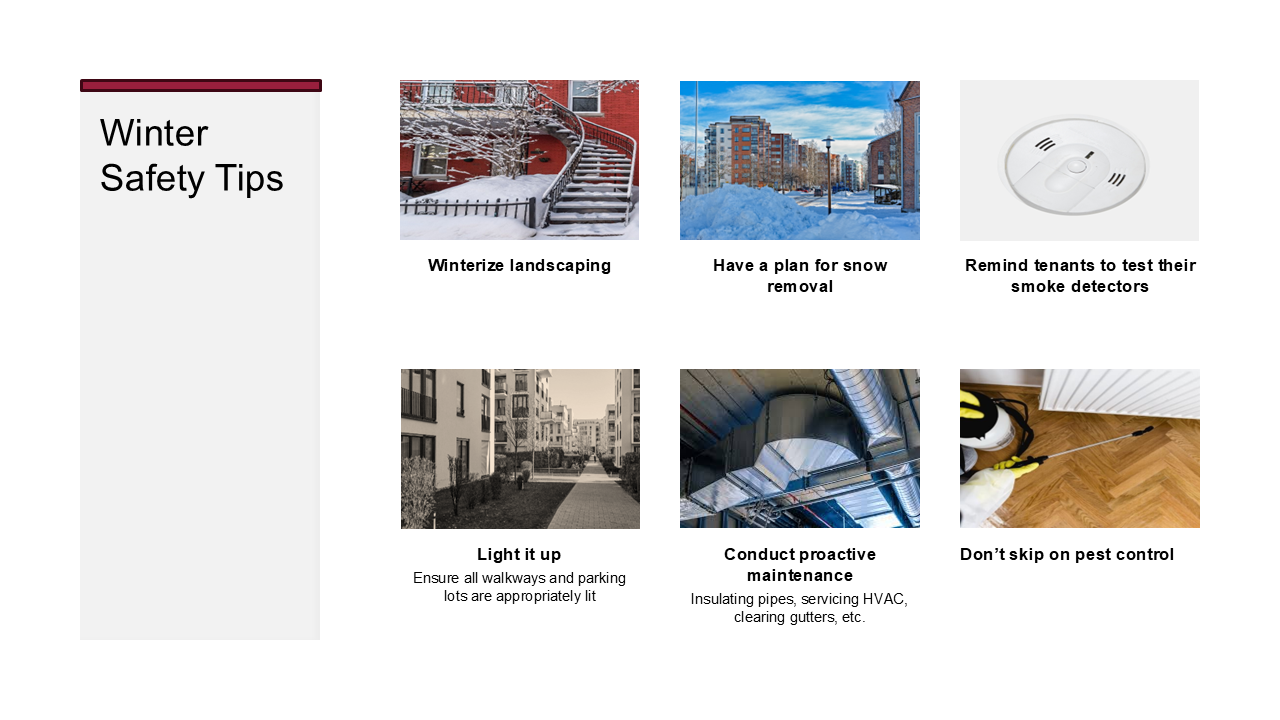
- Winter Safety Tips
-
- AHSC Member Spotlight
-
Introducing our quarterly PBCA Partner Spotlight, Yolanda Banks-Shaw!

What is your position with the PBCA? How long have you been with the PBCA? And, what are your major job tasks with that position?
I work in Service Operation as a CCS (Central Contract Specialist) and have been with the PBCA for seven years. My major job tasks include: managing contracts for 70+ properties, ensuring compliance with HUD regulations; performing detail reconciliation of monthly voucher payments to property owners; reviewing and approving rent adjustments, special claims, and contract renewals; and maintaining property records and positive relationships with owners and agents.
What motivates you professionally? What motivates you personally?
Professionally I am motivated by my desire to do a great job in my current role as a CCS for each process, adapting to new technology, 'CATSWeb' gives me great satisfaction especially when I complete a process and the final audit comes back needing no corrections. Personally I am motivated by my family. Losing family members over the past several years made me realize life is short and to enjoy every moment and not take life for granted.
What lessons have you learned in your role (any work mottos or keys to success as a result)?
To always be detail oriented, managing multiple properties requires being very meticulous, observant, and thorough. This helps me to stay focused on each process and ensure accuracy.
What is your proudest accomplishment (either professional or personal)?
My proudest accomplishment personally was raising my 3 daughters as a single mother, sending each one of them to college graduating with degrees, to see them today thriving is like seeing myself over and over again.
What is the greatest challenge you have overcome in your career?
My career changed from being in the mortgage industry for 20+ years to now working as a CCS. This career change required learning new processes, management styles, new software, and learning how to prioritize my new job functions.
What do you enjoy doing when you are not working?
I enjoy cooking, shopping, interior decorating, gardening, traveling, and wine tasting. I enjoy and love my two grandchildren on any occasion.
From Chrystal Davis, Central Services Manager -
"Yolanda consistently demonstrates exceptional dedication, professionalism, and teamwork. She approaches every task with a positive attitude. Her contributions have had a meaningful impact on the Columbus team as well as the whole state of Ohio. we are fortunate to have such a reliable and motivated individual contributing to the success of our team."
- Contact Center Poster/Information
-
Assisted Housing Services Corporation (AHSC) has created a Customer Contact Center poster that our Owners and Agents of Section 8 Multifamily Housing can post in their rental office. This poster will provide your residents with useful information, such as our business hours, contact information, and general issues that AHSC can assist with, including but not limited to:
- Answering questions about the calculation of a tenant’s rent
- Assisting with clarifying HUD Occupancy Handbook 4350.3 requirements
- Serving as a neutral third party to residents, property owners and management agents, and the general public
A downloadable version of the AHSC Contact Center Poster can be found on the AHSC Website following the links be-low. Or you can find a copy from the Owner/Agent Knowledge Center on the AHSC Website, under the Management and Occupancy tab.
- Closing Thoughts
-
If you are not already receiving this publication via e-mail, or if you have ideas, suggestions, or questions for future publications, we’d like to hear from you. Please send an email to heather.blankenship@cgifederal.com